“Stress Management Techniques You Can Apply Daily”
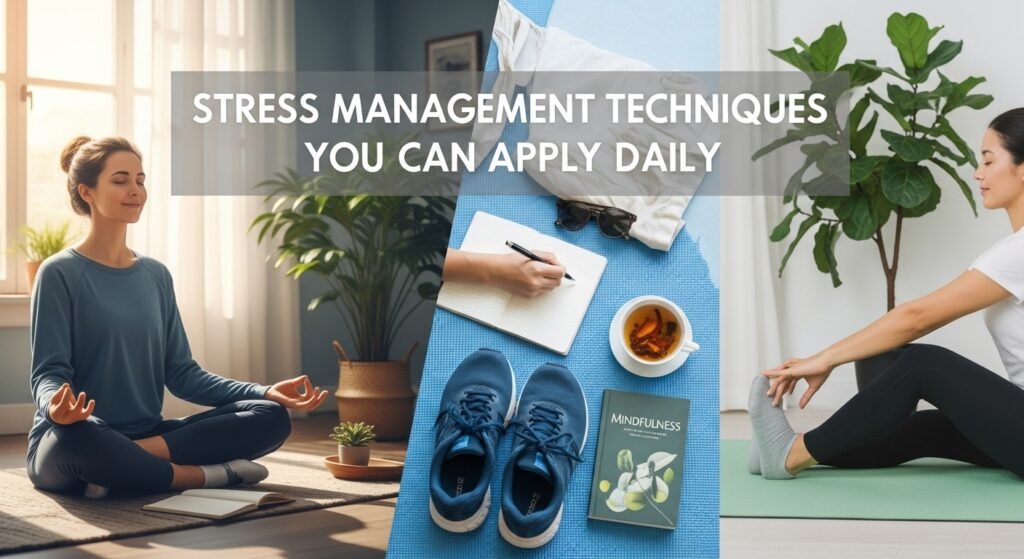
Stress is an inevitable part of modern life. Deadlines, responsibilities, and personal challenges can make you feel overwhelmed. While occasional stress can motivate, chronic stress affects your mental, emotional, and physical health. Learning practical ways to manage stress daily can improve well-being, productivity, and overall quality of life.
This article explores stress management techniques you can apply every day to stay calm, focused, and resilient.
1. Practice Mindful Breathing
Mindful breathing is one of the simplest and most effective ways to reduce stress instantly.
How to apply:
- Take slow, deep breaths in through your nose and out through your mouth.
- Focus on each inhale and exhale, letting go of distracting thoughts.
- Practice for 3–5 minutes during breaks, before meetings, or when feeling anxious.
Regular mindful breathing lowers heart rate, reduces tension, and improves mental clarity.
2. Exercise Regularly
Physical activity is a natural stress reliever that boosts endorphins and energy levels.
Tips for busy schedules:
- Walk, jog, or do home workouts for 20–30 minutes daily.
- Stretch or do yoga to relax muscles and calm the mind.
- Incorporate short movement breaks during work hours.
Exercise not only reduces stress but also improves mood, focus, and overall health.
3. Maintain a Healthy Diet
What you eat affects how your body responds to stress.
Practical advice:
- Consume balanced meals with proteins, fruits, vegetables, and whole grains.
- Limit caffeine, sugar, and processed foods that can spike anxiety.
- Stay hydrated to support mental and physical well-being.
Proper nutrition stabilizes energy, reduces irritability, and supports resilience.
4. Prioritize Sleep
Sleep is essential for emotional regulation and stress management.
Tips:
- Aim for 7–8 hours of quality sleep nightly.
- Maintain a consistent sleep schedule.
- Avoid screens and caffeine close to bedtime.
Adequate rest improves focus, mood, and the ability to handle daily stressors.
5. Time Management and Planning
Poor time management is a major source of stress.
How to apply:
- Use planners or digital calendars to organize tasks.
- Prioritize urgent and important tasks using techniques like the Eisenhower Matrix.
- Break large projects into smaller, manageable steps.
Effective planning reduces overwhelm and gives a sense of control over your day.
6. Practice Mindfulness and Meditation
Mindfulness techniques train your mind to stay present, reducing anxiety about the past or future.
Methods to try:
- Guided meditation using apps like Headspace or Calm.
- Focus on the present moment while walking, eating, or doing chores.
- Journal thoughts and emotions to process them mindfully.
Daily mindfulness enhances emotional resilience and lowers stress hormones.
7. Limit Technology and Social Media Use
Excessive screen time and social media scrolling can increase stress and distraction.
How to apply:
- Schedule specific times to check emails and social media.
- Turn off notifications during work or relaxation periods.
- Replace idle scrolling with reading, hobbies, or outdoor activities.
Digital boundaries help maintain focus, mental clarity, and calmness.
8. Build a Support System
Talking to friends, family, or colleagues reduces stress and provides perspective.
Tips:
- Share challenges and seek advice when needed.
- Spend time with positive, supportive people.
- Consider professional help if stress feels unmanageable.
Strong social support improves coping mechanisms and reduces feelings of isolation.
9. Practice Gratitude and Positive Thinking
Shifting focus from problems to positives can reduce stress and enhance well-being.
How to apply:
- Maintain a gratitude journal, noting 3 things you’re thankful for daily.
- Reframe negative thoughts into constructive or optimistic perspectives.
- Celebrate small achievements and progress regularly.
Positive thinking reduces stress perception and increases motivation.
10. Take Short Breaks and Relaxation Techniques
Continuous work without breaks leads to mental fatigue and stress.
Effective techniques:
- Step away from your desk for 5–10 minutes every hour.
- Practice progressive muscle relaxation or guided imagery.
- Listen to calming music or nature sounds during downtime.
Regular relaxation restores energy, sharpens focus, and reduces tension.
Conclusion
Managing stress effectively requires consistent daily practices. By incorporating techniques such as mindful breathing, regular exercise, healthy diet, adequate sleep, time management, mindfulness, technology limits, support systems, gratitude, and relaxation breaks, you can navigate challenges with calm, focus, and resilience.
Stress is unavoidable, but your response to it is controllable. Apply these strategies consistently, and over time, you’ll notice improved mental clarity, productivity, and overall well-being.