“Sleep Improvement Tips That Really Work”
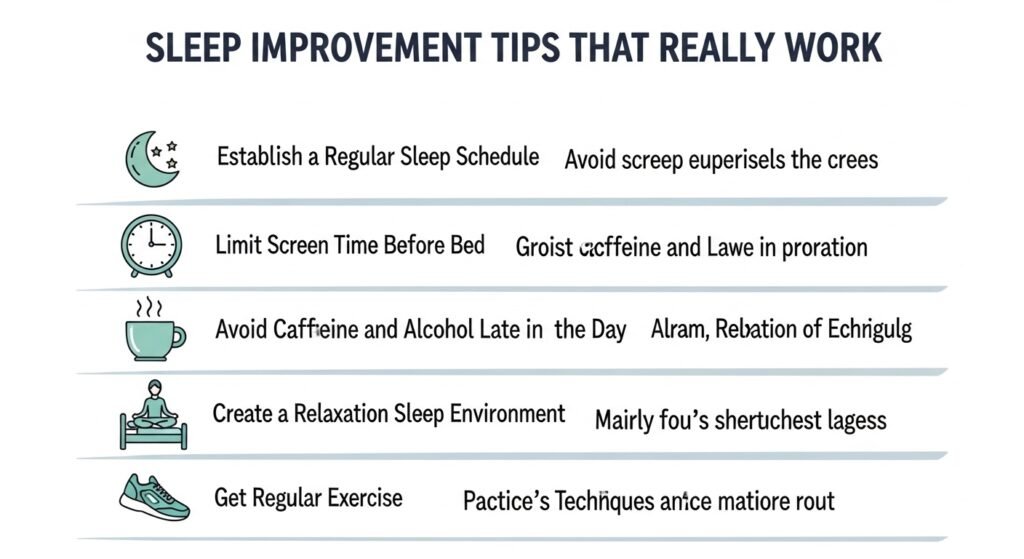
Sleep is essential for overall health, productivity, and mental well-being. Yet, many people struggle to get quality sleep due to stress, irregular routines, or technology distractions. Poor sleep not only affects energy levels but also impacts focus, memory, and mood.
The good news is that improving sleep is achievable with the right habits and strategies. This guide provides sleep improvement tips that really work for busy individuals, students, and professionals.
1. Maintain a Consistent Sleep Schedule
Going to bed and waking up at the same time every day regulates your internal body clock.
How to apply:
- Set a fixed bedtime and wake-up time, even on weekends.
- Avoid sleeping in excessively on weekends to prevent “social jetlag.”
- Use gentle alarms to wake up naturally without stress.
Consistency reinforces your circadian rhythm, making it easier to fall asleep and wake up refreshed.
2. Create a Relaxing Bedtime Routine
A calming pre-sleep routine signals your body that it’s time to wind down.
How to apply:
- Read a book, listen to soothing music, or practice gentle stretching.
- Avoid stressful or stimulating activities like work emails or intense exercise.
- Consider journaling or practicing gratitude to relax your mind.
A relaxing routine improves sleep onset and quality.
3. Optimize Your Sleep Environment
Your bedroom environment plays a crucial role in restful sleep.
Tips:
- Keep the room dark, quiet, and cool (around 18–20°C or 65–68°F).
- Invest in a comfortable mattress and pillows.
- Remove distractions like phones, TVs, or bright lights.
A comfortable and calming environment encourages deeper, uninterrupted sleep.
4. Limit Screen Time Before Bed
Blue light from phones, computers, and TVs interferes with melatonin production, the hormone that regulates sleep.
How to apply:
- Avoid screens at least 30–60 minutes before bedtime.
- Use night mode or blue light filters if screens are necessary.
- Engage in offline relaxing activities like reading or meditating.
Reducing screen exposure promotes faster sleep onset and higher sleep quality.
5. Watch Your Diet and Caffeine Intake
What you consume can affect your ability to fall asleep and stay asleep.
Tips:
- Avoid caffeine and nicotine at least 4–6 hours before bed.
- Limit heavy meals late at night.
- Drink water in moderation—too much can disrupt sleep with nighttime trips to the bathroom.
Mindful eating and drinking habits support uninterrupted, restful sleep.
6. Exercise Regularly
Physical activity promotes deeper and more restorative sleep.
How to apply:
- Engage in moderate exercise 3–5 times per week.
- Avoid intense workouts close to bedtime.
- Incorporate stretching or yoga for relaxation in the evening.
Exercise improves sleep quality, reduces stress, and enhances overall energy.
7. Manage Stress and Anxiety
Stress is a major cause of sleep disturbances. Practicing relaxation techniques can help calm your mind before bed.
Techniques to try:
- Meditation or deep breathing exercises
- Progressive muscle relaxation
- Journaling to process thoughts and reduce worry
Reducing stress signals to your body that it’s safe to rest, improving both sleep onset and duration.
8. Limit Naps During the Day
While short naps can boost energy, long or late-afternoon naps can disrupt nighttime sleep.
How to apply:
- Keep naps under 20–30 minutes.
- Take them before 3 PM to avoid affecting bedtime.
- Use naps strategically for a quick energy boost, not to replace nighttime sleep.
Balanced napping supports alertness without interfering with sleep routines.
9. Expose Yourself to Natural Light
Daylight regulates your circadian rhythm and improves sleep quality at night.
How to apply:
- Spend 20–30 minutes outdoors daily.
- Open curtains and let natural light into your workspace in the morning.
- Avoid dim or artificial light for prolonged periods during the day.
Natural light exposure helps your body recognize day and night cycles effectively.
10. Seek Professional Help if Needed
If sleep problems persist despite healthy habits, it may indicate a sleep disorder.
When to consult a professional:
- Chronic insomnia or difficulty falling asleep
- Frequent nighttime awakenings or early waking
- Excessive daytime sleepiness or fatigue
A sleep specialist can diagnose issues like sleep apnea or restless leg syndrome and provide targeted solutions.
Conclusion
Quality sleep is a cornerstone of physical and mental health. By maintaining a consistent schedule, creating a relaxing routine, optimizing your environment, limiting screens, watching your diet, exercising, managing stress, controlling naps, getting natural light, and seeking professional help if needed, you can drastically improve your sleep quality.
Healthy sleep habits not only boost energy and productivity but also enhance focus, mood, and overall well-being. Start applying these tips today to wake up refreshed and ready to take on each day.