“Time Management Techniques That Actually Work for Students and Professionals”
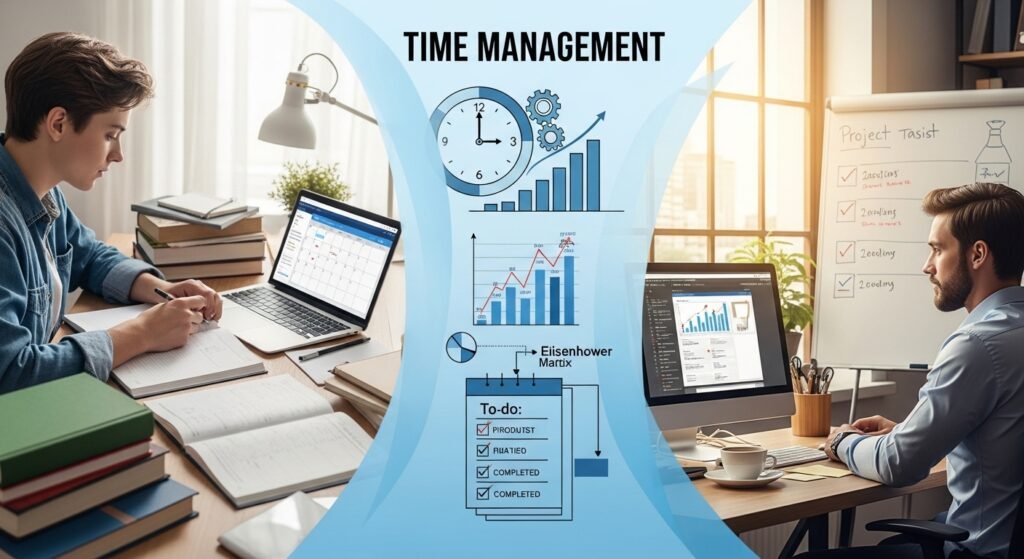
Time is one resource we can never get back. Whether you are a student juggling classes and assignments or a professional handling multiple projects, managing your time effectively is crucial for success. The challenge isn’t having enough hours—it’s using them wisely.
In this article, we’ll explore proven time management techniques that actually work, helping both students and professionals increase productivity, reduce stress, and achieve their goals.
1. Prioritize with the Eisenhower Matrix
Not all tasks are equally important. The Eisenhower Matrix helps you prioritize by urgency and importance.
- Quadrant 1: Urgent & Important – Do immediately
- Quadrant 2: Important but Not Urgent – Schedule for later
- Quadrant 3: Urgent but Not Important – Delegate if possible
- Quadrant 4: Neither Urgent nor Important – Minimize or eliminate
By focusing on tasks that truly matter, you avoid wasting time on low-value activities.
2. Use the Pomodoro Technique
The Pomodoro Technique is a simple method to maintain focus and productivity.
- Work for 25 minutes without distractions.
- Take a 5-minute break.
- Repeat for four cycles, then take a longer break of 15–30 minutes.
This method prevents burnout, improves concentration, and makes long tasks more manageable.
3. Plan Ahead with Daily and Weekly Schedules
Planning your day and week in advance ensures you stay organized and proactive.
- Daily planning: List 3–5 key tasks each day.
- Weekly planning: Allocate time blocks for bigger projects, meetings, and study sessions.
- Tools: Google Calendar, Notion, Trello, or simple planners.
A structured schedule prevents last-minute rushes and improves efficiency.
4. Set SMART Goals
Time management works best when your goals are Specific, Measurable, Achievable, Relevant, and Time-bound (SMART).
- Specific: Clearly define what you want to achieve.
- Measurable: Track progress with quantifiable metrics.
- Achievable: Set realistic targets within your capacity.
- Relevant: Ensure goals align with your priorities.
- Time-bound: Assign deadlines to stay accountable.
SMART goals transform vague intentions into actionable steps, saving time and effort.
5. Limit Distractions
Distractions are a major time-waster. Whether it’s social media, unnecessary notifications, or multitasking, staying focused is critical.
- Digital detox: Turn off notifications during work/study sessions.
- Work environment: Choose a quiet, clutter-free space.
- Single-tasking: Focus on one task at a time instead of juggling multiple activities.
Reducing distractions significantly improves productivity and reduces wasted time.
6. Apply the 80/20 Rule (Pareto Principle)
The Pareto Principle suggests that 80% of results come from 20% of efforts.
- Identify the tasks that produce the highest impact.
- Focus on these tasks first instead of spending time on low-impact activities.
This principle ensures your energy is spent on tasks that truly drive results, whether in studies or work.
7. Use Time-Blocking
Time-blocking involves allocating specific chunks of time for different activities.
- Block hours for focused work, meetings, exercise, or study.
- Include buffer periods for unexpected interruptions.
- Stick to the schedule to create a disciplined routine.
Time-blocking reduces decision fatigue and creates a structured workflow.
8. Delegate and Outsource
Not every task requires your direct attention. Delegating allows you to focus on high-priority responsibilities.
- At work: Assign routine tasks to team members.
- At home: Outsource chores when possible.
- In studies: Collaborate with peers on group tasks efficiently.
Delegation frees up time for activities that have the highest value in your personal and professional growth.
9. Track Your Time
Monitoring how you spend your time reveals hidden inefficiencies.
- Use apps like Toggl, RescueTime, or Clockify to track hours.
- Review weekly to identify wasted time.
- Adjust habits and routines based on insights.
Time tracking creates awareness and ensures that your hours are invested wisely.
10. Practice Self-Care and Breaks
Productivity isn’t about working nonstop—it’s about sustainable energy management.
- Take regular breaks to recharge your mind and body.
- Prioritize sleep, nutrition, and exercise.
- Avoid burnout by balancing work/study with relaxation.
A well-rested and energized mind works faster and more efficiently, effectively “buying” you extra productive hours.
Bonus Tip: Reflect and Adjust
Time management is an ongoing process. Regularly evaluate your routines and techniques.
- Ask yourself: What’s working? What isn’t?
- Make small adjustments instead of overhauling your entire system.
- Experiment with different techniques to find what suits your style.
Continuous improvement ensures that your time management strategies remain effective and adaptable.
Conclusion
Effective time management is not about doing more—it’s about doing the right things efficiently. By using prioritization, planning, focused work techniques, delegation, and self-care, students and professionals can maximize productivity, reduce stress, and achieve their goals faster.
Remember, time is the most valuable asset. Implementing these techniques consistently will help you stay ahead, meet deadlines, and maintain a balanced life—making your efforts in studies or career truly count.